Monet’s Haystacks – On Keeping at It
Monet’s Haystacks (or On Keeping at It)
Monet painted haystacks one by one from 1890 to ’91,
In all kinds of weather, Spring through Fall,
Summer and winter he painted them all.
Twenty-five haystacks—that’s a lot of paint
But he simply kept going, this artistic saint.
He prayed with his brushes and oils and such
Leaving a record reminding how much
Importance there is to do it again,
Whatever that it is, until the end.
With his paintings in mind, I long for the space
To hang twenty-five haystacks, a special place
To keep as reminders (I’d need a new home)
Umpty some walls where my eyes could then roam.
If only to have Monet’s artwork in view,
I’ll lobby for moving to a home that is new
And hang all those paintings, their succession a sign
That over and over from now to all time
To just keep at it while my gifts find their way,
And practice and practice and practice each day.
I’ve been thinking a lot about creativity and honoring God the Creator in my work (and, as the poem above attests, wishing I had more empty walls in my house for artwork!) The root word that gives us ‘poem’ is the word ‘poiema’ from the Greek. Translated literally it means ‘a thing that is made.’
In the New Testament the Apostle Paul uses ‘poiema’ to describe believers as “God’s workmanship,” His made thing, His poems. When we create our own ‘made things’ we create a kind of poetry, whether making a bouquet from the garden, planning and cooking a meal, painting a picture or organizing a messy drawer. Making order and beauty in the world is a way to write a poem of sorts and mirror the work of Creator God who brought order out of chaos.
Monet managed his chaos with a paintbrush, offering his 25 or 30 practices as a prayer.
We are not Monets and cannot always be at the easel or art table or desk with our pens. Whether it is the actual work in our days–at a computer, in the kitchen, in the office, in the classroom, in our homes–or the gift of creative work, either way there is a good deal of just keeping at it.
Life and creative pursuits involve a lot of opportunities for practice and and provide a way to pray and process our thoughts along the way.
My friend Gwen and I share a love of jigsaw puzzle-ing. We find great joy in creating piece by piece a work of art from a pile of cardboard jumbles–I have a theory as to why. The practice of play at puzzles offers a meditative way to sort out the often puzzling parts of life; a great metaphor if ever there was one.
And, how many times have I picked up a puzzle piece to see if it fit then discover my error…then try another way of looking at the piece? It’s practice, practice, practice.
Artists spend a lot of time making mistakes on the way to creating something beautiful.
What’s in your hand today? What puzzles are you facing? As a creative soul, do you have a work of art in mind–words or pictures or something else? And how might you ‘pray’ with your pen or paintbrush or spoon? Or with pruners in your hand, bending to pull a weed or wash another dish? Whether cleaning, organizing or creating, whatever is before you, be encouraged to just keep at it.
Let’s make something beautiful that will last. (Speaking of keeping at it, I’ve included an inspiring video link below.)
Pssssst. You can catch up with the other Rhymes for Reflection written so far by clicking this link. It will lead you to a list with the PDF link to print out the poem, add to your Poetry Notebook and enjoy!
In Case You Missed It– Essay and Poem Featured in Commonplace Magazine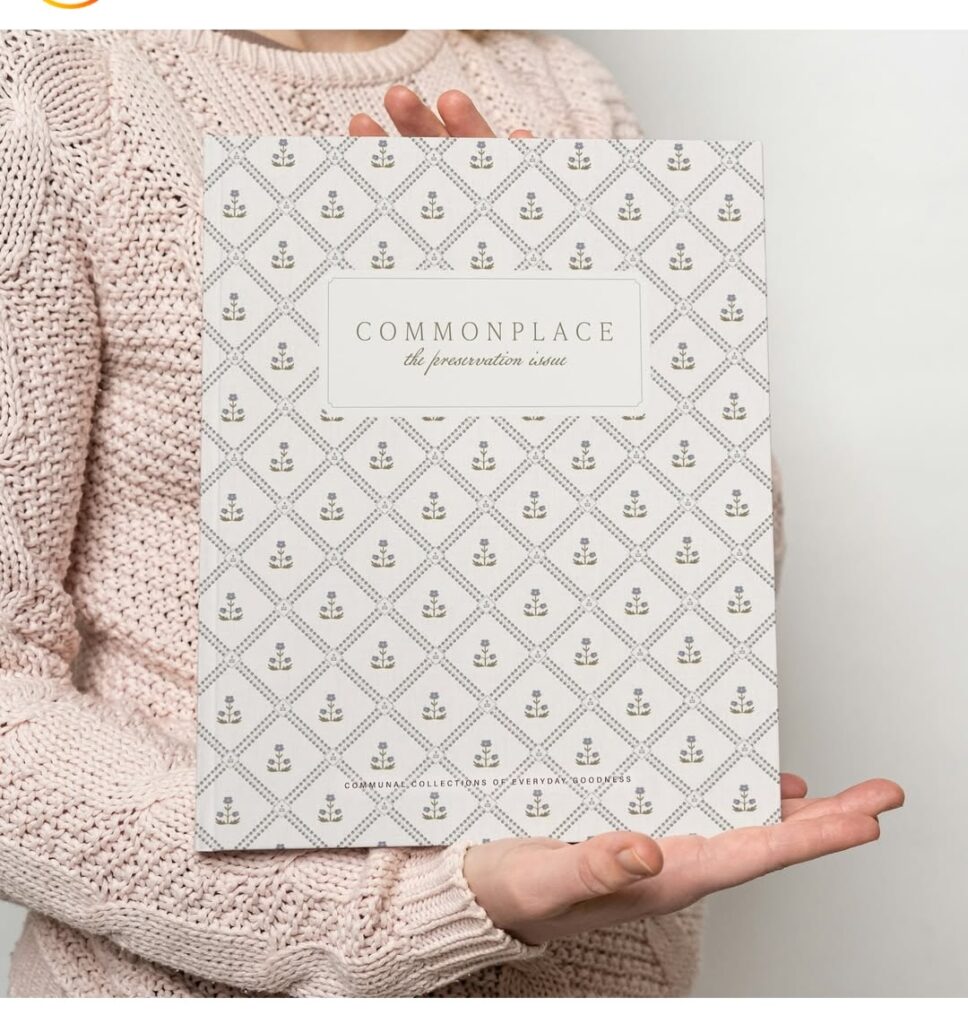
I’m honored to have a poem, “How to Stay Married” and an essay, “On Keeping Words” in the newest issue of Commonplace Magazine from the Daughters of Promise. This quarter’s theme is ‘Preservation’ and contains 208 pages of beautiful content–poetry, photography, essays and artwork. I do hope you’ll consider ordering a copy; the issue is $20.99 plus postage and worth every penny. Simply click on the photo to order or use THIS LINK.
Footnoote: HERE is a link to some of Monet’s haystacks. He painted between 25 and 30; they weren’t actually hay–most likely barley or oats.